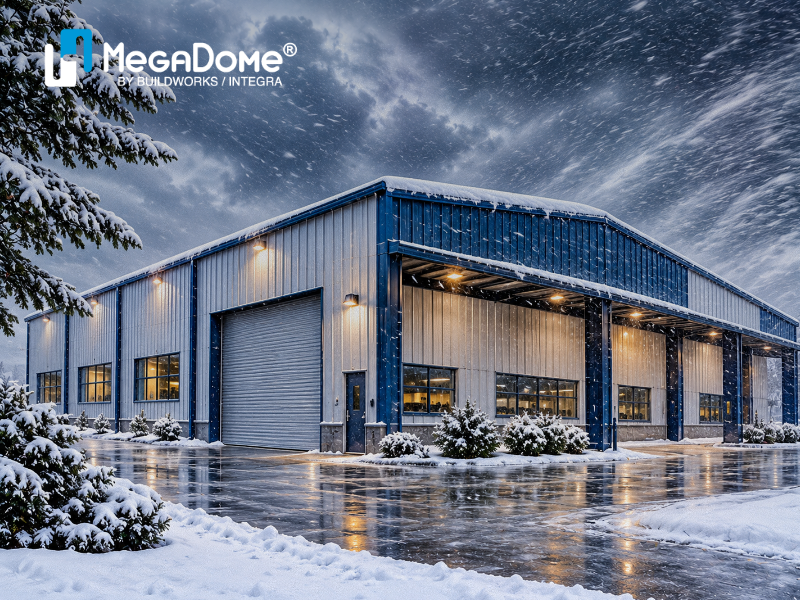
Coverall buildings are designed to provide protected, functional spaces for businesses operating in challenging weather conditions. From heavy snowfall and strong winds to continuous rainfall and intense UV exposure, these structures use engineered frameworks and specialized fabric membranes to protect equipment, materials, and daily operations. Their performance depends on proper structural calculations, material selection, foundation design, and professional installation.
For businesses in Canada, where weather conditions can vary significantly between regions and seasons, choosing the right building system is especially important. Modern industrial fabric building engineering combines durable steel frameworks, weather-resistant membranes, and carefully designed connections to support reliable performance. Understanding these features helps businesses select coverall buildings that meet their environmental and operational requirements.
Coverall buildings are designed around the environmental conditions of their installation location. Engineers consider snowfall, wind speeds, rainfall, temperature changes, and UV exposure when selecting structural materials, membrane specifications, foundations, and connection systems.
Fabric Structure Engineering involves evaluating environmental conditions before finalizing the building design.
Engineers assess:
These factors influence the building’s shape, structural span, framework specifications, and fabric selection.
Fabric Building Structural Design ensures that the framework, membrane, connections, and foundations work together under expected environmental loads.
A properly engineered structure distributes forces through its supporting frame and transfers them safely into the foundation.
Poorly designed connections or inadequate anchoring can reduce overall building performance, even when high-quality materials are used.
Important weather-resistant features include:
Structural engineering helps coverall buildings withstand snow by calculating roof loads, evaluating structural spans, and specifying suitable frames, connections, and foundations. Engineers consider local snowfall conditions and potential snow accumulation to ensure the building can safely support the expected weight.
Snow-load calculations consider several factors, including:
The required structural capacity varies by location. A building in a region with heavy snowfall requires different engineering considerations from one in a milder climate.
Steel frameworks transfer roof loads through structural members, connections, and supporting foundations.
Engineers select appropriate steel profiles, frame spacing, and reinforcement based on the building’s dimensions and calculated loads.
Steel Frame Fabric Buildings can provide strong structural support when their components are correctly specified and installed.
Roof geometry can influence how snow accumulates and moves across a structure.
Important design considerations include:
Pro Tip: Never assume snow will slide off a fabric roof automatically. Snow accumulation must be considered during engineering, and removal should follow the manufacturer’s approved safety procedures.
Modern coverall buildings resist wind through engineered steel frameworks, reinforced connections, secure anchoring, and properly tensioned fabric membranes. Their ability to withstand strong winds depends on local wind calculations, building dimensions, exposure conditions, and the quality of installation.
Wind creates pressure and suction forces across the roof and walls.
These forces can affect:
Engineers evaluate these forces to determine the required structural specifications.
Steel Frame Fabric Buildings use structural frames designed to distribute wind forces throughout the building.
Important components include:
Each component contributes to overall structural stability.
A properly tensioned membrane helps maintain the intended building shape and reduces excessive movement.
Incorrect tension can create stress concentrations, fabric movement, or premature wear.
Installation should follow manufacturer specifications and engineering documentation.
Fabric membranes protect coverall buildings by creating a weather-resistant exterior that helps prevent direct exposure to precipitation and sunlight. Their performance depends on coating quality, tensile strength, UV resistance, waterproofing, seams, and correct installation.
Common membrane materials include PVC-coated polyester and other engineered architectural fabrics.
These materials are selected for properties such as:
Specific performance varies between products and manufacturers.
A UV Resistant Fabric Membrane is designed to withstand sunlight exposure and reduce deterioration caused by ultraviolet radiation.
UV-resistant coatings and material treatments can help maintain membrane performance over time.
This is particularly important for buildings exposed to continuous sunlight or significant seasonal temperature changes.
Fabric membranes provide a protective exterior that helps keep precipitation away from stored equipment and materials.
Properly designed roof slopes, tensioning, seams, and drainage systems help prevent water accumulation and leakage.
| Material Feature | Main Purpose | Practical Benefit |
| UV resistance | Reduce sunlight-related deterioration | Supports membrane longevity |
| Waterproof coating | Resist water penetration | Protects stored materials |
| Tear resistance | Resist fabric damage | Improves membrane durability |
| Tensile strength | Withstand membrane forces | Supports structural performance |
| Flexible construction | Accommodate design requirements | Supports different configurations |
Canadian weather conditions make location-specific building design essential. Depending on the region, coverall buildings may need to withstand heavy snow, strong winds, freezing temperatures, rain, and seasonal temperature changes. Engineering decisions should follow applicable Canadian building codes and local environmental requirements.
Snowfall varies considerably between Canadian provinces and communities.
Buildings in areas with substantial winter snowfall require careful evaluation of ground snow loads, roof accumulation, snow drifting, and possible unbalanced loading.
A design suitable for one region should not automatically be assumed suitable for another.
Canadian building projects must comply with applicable provincial and local regulations, including relevant requirements based on the National Building Code of Canada.
Engineering professionals assess:
Businesses should select structures based on both current and expected operating conditions.
For example, a storage facility in a snowy region may need stronger roof-load capacity, while a building in a coastal location may require additional attention to corrosion protection and wind exposure.
Pro Tip: Work with qualified professionals familiar with the building location and applicable Canadian regulations before approving structural drawings.
Regular maintenance helps coverall buildings retain their weather-resistant performance by identifying membrane damage, loose connections, corrosion, drainage problems, and foundation issues. Inspection schedules should follow manufacturer recommendations and account for local weather conditions and building usage.
A practical maintenance approach includes:
Inspection frequency should reflect the building’s design, environmental exposure, and manufacturer guidance.
Fabric maintenance should focus on keeping the membrane clean and identifying damage early.
Recommended practices include:
Avoid harsh chemicals, abrasive tools, or unauthorized repairs that could damage protective coatings.
Galvanized Steel Fabric Buildings use protective zinc coatings to help reduce corrosion.
Hot Dip Galvanized Steel Buildings receive a zinc coating through a hot-dip galvanizing process, creating a protective barrier against environmental exposure.
Maintenance should include checking for coating damage, corrosion around connections, and areas exposed to standing moisture.
| Maintenance Task | Recommended Timing | Purpose |
| Visual inspection | Regularly | Identify visible damage |
| Fabric inspection | Seasonally | Check seams and tension |
| Drainage inspection | Before wet seasons | Prevent water accumulation |
| Steel inspection | Periodically | Identify corrosion |
| Professional assessment | As recommended by engineers | Review structural condition |
Selecting a weather-resistant coverall building requires evaluating local climate conditions, structural specifications, fabric quality, steel protection, foundation design, and installation standards. Businesses should request engineering documentation to confirm that the proposed structure meets the environmental demands of its intended location.
Before purchasing, check:
Compare fabric membranes based on UV resistance, waterproofing, tensile strength, and manufacturer warranties.
For structural components, review steel grade, protective coating, corrosion resistance, and connection specifications.
Hot-dip galvanized steel and suitable engineered membranes can provide useful protection when correctly selected for the environment.
Ask suppliers:
Pro Tip: Compare complete engineering packages rather than selecting a building based only on fabric thickness or steel specifications. The entire structure must work together to provide reliable weather protection.
Coverall buildings can provide reliable protection against snow, wind, rain, and harsh weather when designed around local environmental conditions. Their performance depends on Industrial Fabric Building Engineering, suitable structural frameworks, weather-resistant membranes, secure foundations, and professional installation.
From Steel Frame Fabric Buildings to UV-resistant membranes and corrosion-protected structural components, every element contributes to the building’s overall performance. Regular inspections and appropriate maintenance also help preserve structural integrity and material condition.
For businesses operating in Canada, investing in properly engineered coverall buildings means considering regional snowfall, wind exposure, rainfall, and temperature variations before construction begins.
Planning a weather-resistant industrial facility? Consult an experienced fabric building specialist to discuss your site conditions, structural requirements, and material options before selecting the right coverall building solution.
Yes. Coverall buildings can be engineered for heavy snow conditions by calculating local snow loads and selecting suitable structural frames, connections, foundations, and roof configurations. Their actual snow capacity depends on the engineering specifications and installation location. Snow removal should always follow manufacturer-approved procedures.
Properly engineered coverall buildings can withstand specified wind conditions. Their performance depends on structural frame strength, bracing, foundation anchoring, fabric tension, and connection quality. Businesses should request wind-load calculations designed for their specific location rather than relying on general wind-resistance claims.
PVC-coated polyester is commonly used in fabric building membranes because it offers useful tensile strength, flexibility, and weather resistance. However, the best material depends on UV exposure, temperature conditions, waterproofing requirements, and the intended application. Always review manufacturer specifications before selecting a membrane.
Yes. Properly installed fabric membranes provide a protective covering against rainfall. Roof slope, membrane quality, seams, tensioning, and drainage systems all influence water management. Regular inspections help identify damaged seams, punctures, and drainage problems before they lead to water penetration.
Coverall buildings designed for Canadian winters require engineering that considers regional snow loads, wind exposure, freezing temperatures, and roof drainage. Structural steel, suitable membrane materials, and properly designed foundations help support performance. The building must meet applicable provincial and local building requirements.
Galvanized steel has a protective zinc coating that helps reduce corrosion caused by moisture and environmental exposure. Hot-dip galvanizing provides a protective coating on steel components. This can improve corrosion resistance and reduce maintenance requirements, although periodic inspections remain necessary.
Membrane lifespan depends on material quality, UV exposure, environmental conditions, installation, and maintenance. Different manufacturers offer different warranties and expected service lives. Businesses should review product specifications, inspect membranes regularly, and follow approved cleaning and repair procedures.
Coverall buildings should receive regular visual inspections, with additional checks before and after severe weather. Maintenance should include examining fabric seams, membrane tension, steel connections, corrosion protection, anchors, and drainage systems. Follow the manufacturer’s inspection schedule and arrange professional assessments when necessary.
Yes, provided they are specifically designed for the environmental conditions. Coastal and humid locations require attention to corrosion protection, drainage, ventilation, and material selection. Galvanized steel and suitable fabric membranes can help, but structural specifications should account for local wind and moisture exposure.
Please complete this form to receive a
your FREE Design Guide.
Please fill out the form below to request to quote.